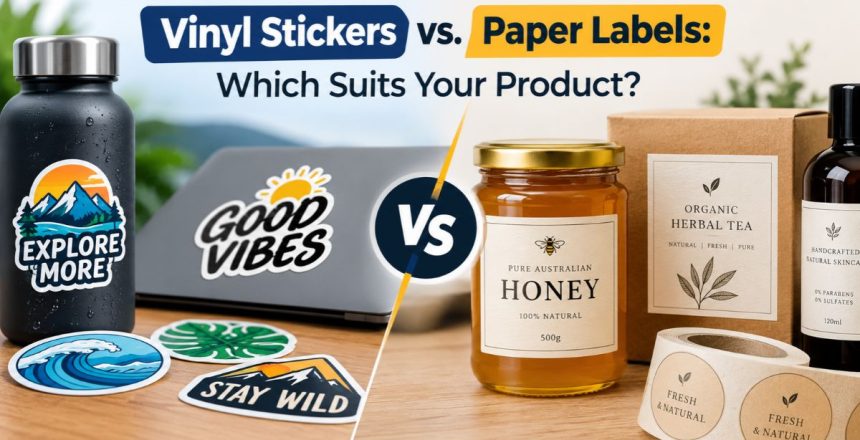
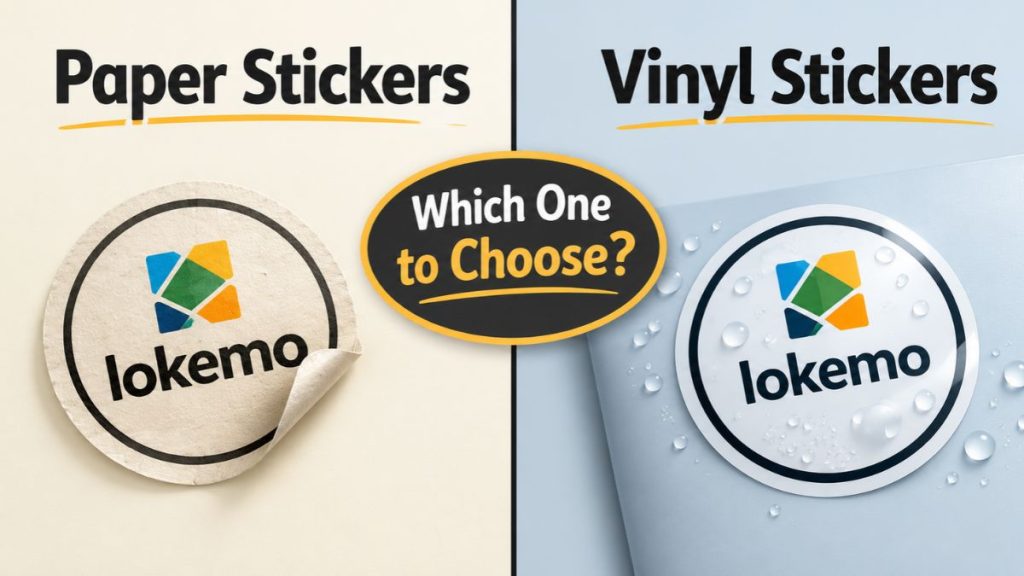
Depending on the environment that your product faces, the right option will be either vinyl or paper, because vinyl is good for products that face moisture, sunshine, and physical abuse. In contrast, paper is better suited for indoor products with a need for naturality. In the decision-making process of choosing between vinyl stickers vs. paper labels, no one option wins, as the choice is influenced by budget, packaging, and brand character.
BrandLift, a full-service branding studio on the Sunshine Coast, designs, prints and finishes stickers and labels under one roof. Our in-house designers and printers operate side-by-side, meaning that you can expect colour matching and speedy revisions. All orders are subjected to rigorous quality control checks before shipping out, and all are covered by an extensive warranty.
What Sets the Two Materials Apart?
Vinyl is a tough and water-resistant synthetic material that does not crack, fade, or tear easily; thus, manufacturers opt to use vinyl stickers on their bottles, tubs and outdoor goods. In addition, there are various finishes available, such as gloss, hologram, and dome, which also add to a product’s distinction from other products.
Paper offers a soft, tactile surface that customers associate with craft, organic and boutique goods. Paper product labels print beautifully in matte stocks and often cost less on large runs. However, paper absorbs moisture, scuffs easily and curls when conditions turn damp, so it often needs a protective coating.
Will Your Packaging Survive Moisture and Handling?
Anything that sits in a fridge, a shower or a ute tray needs a label that shrugs off water. Waterproof vinyl stickers keep their colour and grip when condensation, spills or rain hit them, so your branding stays readable from the warehouse to the customer’s kitchen. That durability protects your reputation as much as your product.
Handling matters just as much as moisture, because products pass through warehouses, delivery vans and busy hands before reaching a shelf. Vinyl labels for packaging withstand those knocks, and BrandLift recommends premium Avery Dennison films when a job demands extra toughness. As an Avery Dennison Premium Partner, our team knows which adhesives suit each surface.
How Do Cost and Brand Image Compare?
Budget often tips the scales in the vinyl stickers vs. paper labels decision, so look beyond the price per unit. Paper costs less upfront, but replacing scuffed or peeling labels erodes those savings quickly. Vinyl costs more initially, yet it can last three to seven years outdoors with proper care, which makes it a sensible investment.
Brand image deserves equal weight in your decision. Many artisan food and candle makers build their identity around the warmth of paper labels for product packaging, while vinyl communicates polish through clear no-background cuts and metallic finishes. Choose the material that mirrors the story your customers expect you to tell, and think about how shoppers will feel when they pick up your product.
Factors to Weigh Before You Order
Run through this checklist before you approve your order:
- Environment: Check whether your product will face water, sunlight, cold storage or heavy handling.
- Surface: Choose flexible vinyl for curved bottles and either material for flat cartons.
- Volume: Compare single cuts, sheets and rolls, because rolls suit automated application.
- Finish: Decide between matte, gloss, holographic or domed effects for the look you want.
- Lifespan: Estimate how long the label must stay legible on the shelf and in the customer’s home.
How Can Local Expertise Simplify Your Decision?
Sampling materials in person removes the guesswork. When you order custom stickers on the Sunshine Coast, you can visit the studio, handle material samples and talk through finishes with the people who will print your job. BrandLift cuts and prints everything in-house, so you control colour accuracy, shape and turnaround from the start.
BrandLift works with vinyl, polyester and polypropylene, and supplies stickers as single cuts, sheets or rolls to suit your workflow. Our designers prepare print-ready artwork, and our friendly team offers honest advice for small batches and full brand rollouts alike. That flexibility gives start-ups and established brands the same careful attention.
Match the Material to Your Product’s Journey
Your product’s journey decides the winner. If it meets moisture, sunlight or heavy handling, vinyl protects your branding, whereas dry, indoor goods with a handmade story often look best on paper. When you compare vinyl stickers vs. paper labels honestly against your budget, surface and audience, the answer becomes clear.
Ready to move forward? BrandLift prints, cuts and quality-checks every sticker and label at its Warana studio, then dispatches orders quickly to businesses across the Sunshine Coast and nationally. Our team guides you through materials and finishes, and a comprehensive guarantee backs our work.
Call us, email us, or visit brandlift.com.au for your free quote.
FAQs:
How long do outdoor stickers last before they fade?
With proper application and care, BrandLift’s stickers and decals can last three to seven years outdoors, and longer indoors. Sun exposure, harsh weather and rough handling all shorten that lifespan, so premium films and correct surface preparation make a real difference.
Which supply format suits a busy packing line?
Roll stickers suit busy packing lines because they feed continuously into automated dispensing equipment. BrandLift can customise roll lengths and widths to fit your machinery, which saves time and reduces wasted labels. Sheets suit retail packs, while single cuts suit hand application.
What finish gives packaging a premium look?
Domed stickers add a glossy, three-dimensional resin coating that resists scratches and UV damage, while holographic finishes add shimmering colour. BrandLift also uses lamination, spot UV and foil stamping to lift print quality. Test a finish on a sample first to confirm it suits your product.
Do I need finished artwork before I request a quote?
No, you can start with a rough idea. BrandLift’s in-house designers prepare print-ready artwork optimised for stickers and labels, and they can include product information and custom shapes. Working alongside the printers also speeds up revisions and keeps colours accurate.