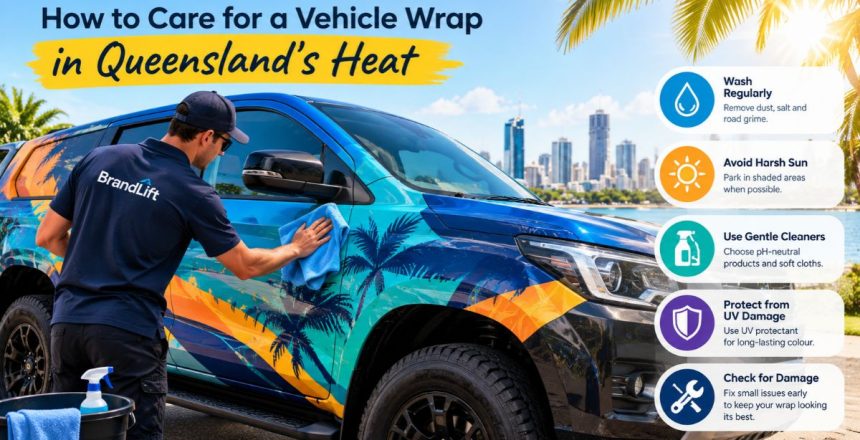
You protect a vehicle wrap in Queensland’s heat by washing it gently every week or two, parking it in shade whenever possible, and keeping harsh chemicals and high-pressure jets away from the film. Smart vehicle wrap maintenance in Queensland matters because UV, salt and humidity wear down vinyl a little each day, and steady habits keep your colours vivid and your edges sealed for years. This guide explains the practical steps that every owner can follow without any special equipment.
BrandLift is a Sunshine Coast branding studio whose full and partial wraps turn your vehicles into rolling billboards using long-lasting materials. Our designers, account managers and expert installers work under one roof, so you deal with a single team from the first sketch to the final install. A comprehensive workmanship guarantee and manufacturer warranties back every project we complete.
What Makes Queensland’s Climate So Tough on Vinyl?
Queensland delivers intense UV radiation, high humidity and long stretches of summer heat, and these three forces work together to age both the adhesive and the printed film on your vehicle. Dark bonnets and roofs can become hot enough to burn bare skin, which softens the vinyl and encourages it to creep slowly at the edges. Coastal salt then settles on the surface and attracts grime that speeds up the wear.
Owners who ignore these pressures often notice heat damage to vinyl wraps as faded colours, cracked laminate, bubbling or lifting corners. Catching the early signs lets you fix small problems before they spread across a whole panel, and a quick inspection each time you wash takes only a minute. Check the edges, seams and recessed areas first, because those spots fail well before flat panels do.
How Often Should You Wash a Wrap in Summer?
Most wraps in our climate benefit from a wash every one to two weeks, and sound vehicle wrap maintenance in Queensland also means rinsing off bird droppings, bug splatter and tree sap straight away because their acids etch the film quickly. Washing by hand with a soft microfibre mitt, cool water and a pH-neutral car shampoo remains the safest approach. Choose early morning or evening, since soap that dries on a hot panel leaves stubborn spots.
Effective vehicle wrap cleaning also means rinsing thoroughly and drying with a clean microfibre towel so water never evaporates on the vinyl. If you use a pressure washer, hold the nozzle at least 30 centimetres from the surface, use a wide fan tip and never aim the jet at edges or seams. Skip automatic brush washes entirely, because spinning brushes catch edges and scratch the finish.
Do Sealants and Coatings Help Against the Sun?
A quality ceramic spray or vinyl-safe sealant adds a thin sacrificial layer that reflects some UV and helps water, dust and grime slide off the surface. Apply it every few months to a clean, dry wrap, and always confirm the product suits vinyl, because waxes containing solvents or abrasive polishes can cloud matte and satin finishes.
This extra layer forms the core of vehicle wrap protection through a long Queensland summer, and it makes your weekly wash quicker and gentler. Your installer can recommend suitable products for your specific finish, whether gloss, matte, satin or textured, so you never have to guess what your film can handle.
How Does Quality Installation Affect Long-Term Results?
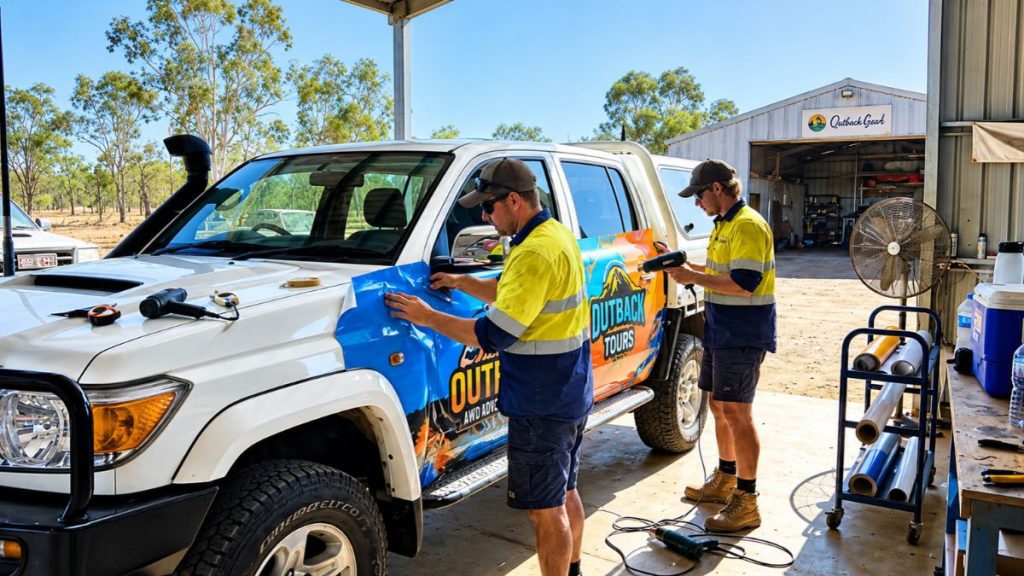
A well-installed wrap lasts longer because the installer prepares the surface properly, heats the film evenly and seals every edge correctly. When you order a custom car wrap on the Sunshine Coast from an experienced local studio, you also receive artwork planned around your panels, so the design avoids awkward seams and high-stress areas.Strong adhesion and neat edges make car wrap maintenance far simpler, because water and dirt struggle to creep beneath the film. Ask your installer for written aftercare instructions and book a quick check as soon as you notice any lifting, since an early repair costs far less than replacing a damaged panel.
Mistakes That Shorten a Wrap’s Life
Even careful owners slip up occasionally, and good vehicle wrap care starts with knowing which habits cause the most harm. Avoiding the following mistakes will protect your wrap far better than any expensive product.
- Scrubbing with abrasive sponges, rough towels or stiff brushes that scratch the surface.
- Using household cleaners, degreasers or solvents that strip the laminate and weaken the adhesive.
- Picking at lifted corners yourself, which lets dirt and moisture work further underneath.
- Washing in direct midday sun, which dries soap onto the vinyl before you can rinse it off.
Keep Your Wrap Looking Fresh Under the Queensland Sun
Consistent vehicle wrap maintenance in Queensland comes down to gentle washing, regular shade, occasional sealing and quick attention to small faults, and each of these habits adds real time to the life of your graphics. None of them requires much effort, yet together they protect the investment you made in your brand.If you want a wrap that looks sharp from day one, visit BrandLift at 3/6 Premier Circuit, Warana, where you can inspect material samples and finished vehicle wraps.
Call us for a free quote, and we will talk you through the options for your fleet or single vehicle.
FAQs:
How soon can I wash my vehicle after installation?
Most installers ask you to wait several days so the adhesive bonds fully with the paint. Washing too early can lift edges and trap water beneath the film. Follow the aftercare instructions you receive at handover.
What should I do if a corner starts lifting during summer?
Avoid pressing it down yourself, because dirt on the adhesive weakens the bond further. Keep the area dry, avoid pressure washing near it and contact your installer promptly. A small repair now prevents the lift from spreading across the panel.
Does a partial wrap need different treatment from a full wrap?
The cleaning routine stays the same, but a partial wrap sits beside exposed paint, so you should avoid polishing or waxing right up to the vinyl edge. Product residue can build up along the border and cause lifting. Treat the paint and the film separately.
Can bird droppings really damage vinyl overnight?
Yes, because droppings are acidic and the heat bakes them onto the surface within hours. They can leave permanent etching in the laminate, particularly on dark colours. Rinse them with cool water and a soft cloth as soon as you spot them.