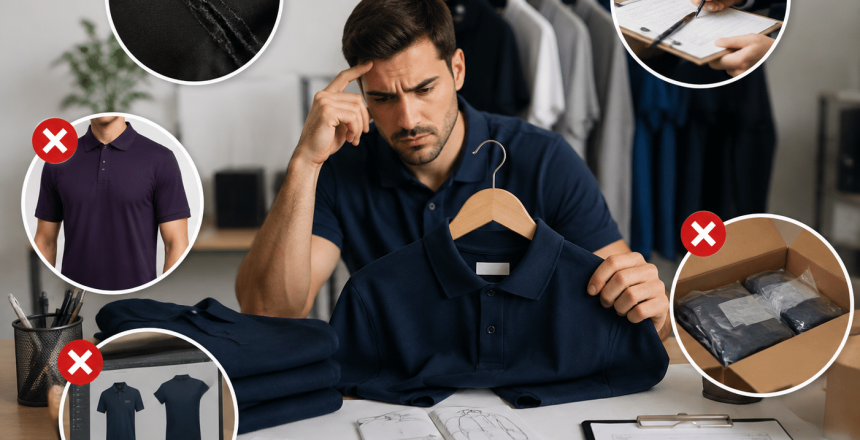
Ordering branded clothing is an investment in your business. Rushing the process often leads to added costs, inconsistent branding, and uniforms that wear out faster than expected. If you are wondering how to choose custom branded clothing, the answer starts with garment quality, branding methods, and long-term needs, not price alone. Avoiding a handful of common mistakes goes a long way toward apparel that represents your brand well and holds up under daily use.
Why Getting Your Branded Apparel Right Matters
Your clothing says something about your business every time your team meets a customer. Uniforms make it easier for people to recognize your brand and can help create a consistent impression across interactions. There is also a practical side to this. Staff who wear well-fitted, well-made apparel often feel more comfortable representing the company, which matters more than most businesses expect.
A lot of companies order custom company clothin without thinking through how it will actually be worn day to day. A garment that looks great in a catalog photo might not hold up to outdoor work, frequent washing, or physically demanding shifts. Spending a little more time upfront on product and decoration choices tends to pay off later.
Mistake 1: Choosing Price Over Quality
Keeping costs down is a reasonable goal, but the cheapest garment on the list is not always the cheapest option in the long run. Fabrics that fade, shrink, or lose shape after a handful of washes end up needing replacement sooner, and that adds up.
It helps to think about where the clothing will actually be worn. A construction crew needs something different from a retail team or a hospitality staff. Comfortable, durable garments let employees do their jobs without worrying about how they look by the end of a shift.
When you compare quotes from suppliers, look past the number on the page. Ask about fabric quality, stitching, and how well the branding is likely to survive repeated washing over months of use.
Mistake 2: Using the Wrong Branding Method
Not every logo suits every decoration method, and this is where a lot of orders go wrong. Businesses sometimes pick a branding option without understanding what it is actually good at.
Custom embroidery holds up well and gives a professional look on polos, jackets, and caps. Screen printing works better for bold, larger designs, especially on bigger orders. Logo printing is usually the better fit for detailed graphics or promotional shirts with more color. The right choice depends on the garment fabric, how detailed the logo is, and how the item will be used.
A supplier with experience across all three, such as BrandLift, can walk you through which method fits your artwork and your budget instead of applying the same process to every job that comes through the door.
Not sure which branding method suits your logo? [Talk to BrandLift about your apparel project]

Mistake 3: Providing Poor-Quality Artwork
A logo that looks crisp on your website is not automatically ready for print or embroidery. Low-resolution files tend to come out blurry, with rough edges or colors that do not quite match.
Before you place an order, check the file format. Vector files hold up better because they can be resized without losing sharpness. If your business already has set brand colors, make sure the supplier has the correct codes on hand, since screen colors and printed colors do not always match without that step.
A supplier that reviews your artwork before production starts can flag problems while there is still time to fix them, rather than after the order is finished.
Mistake 4: Ordering Only for Today’s Needs
It is common for businesses to order exactly enough uniforms for the staff they have right now. Then a few new hires come on board, and matching the original garments turns into a headache because the supplier has changed stock or discontinued the style.
Thinking a step ahead usually saves time and money later. Consider where your team is likely to be in six months or a year, including seasonal hires or planned growth. Keeping a few spare uniforms on hand for new employees is worth the small extra cost. It also helps to choose garments from suppliers who keep styles in stock long term, and to hold onto your logo files and color specifications so future orders match without extra back and forth.
None of this needs to be complicated. It just means treating your first order as the start of an ongoing relationship rather than a one-time purchase.
Mistake 5: Choosing a Supplier Based Only on Price
The lowest quote is not always the best deal once you factor in communication, quality control, and what happens after the order ships. A supplier who is hard to reach or slow to fix mistakes can cost you more time than the discount was worth.
Before signing off on a supplier, it is worth asking a few direct questions. Do they handle decoration in-house, or does the work go to a third party? Have they worked with businesses in your industry before? Do they check artwork before production, and can they keep your branding consistent for orders down the line? A supplier willing to answer these clearly is usually one worth working with.
BrandLift takes this approach with clients, offering practical guidance alongside in-house production, so the advice and the actual work come from the same place.
Have a project in mind? [Get in touch with BrandLift today]

How to Choose Custom Branded Clothing for Your Business
Start by figuring out what the apparel is actually for. Everyday workwear, promotional giveaways, customer-facing uniforms, and trade show shirts all call for different fabrics, fits, and decoration methods, so it helps to be specific before you start browsing catalogs.
From there, think about how the apparel fits your brand image. Corporate branded apparel should look professional without sacrificing comfort, since employees may be wearing it for eight hours or more. Color choice, logo placement, and garment style all play into how the final product reads to a customer.
Talking through your goals with an experienced supplier before placing an order tends to prevent a lot of the mistakes above. Whether the need is staff uniforms, business uniforms, or custom promotional clothing, a supplier who asks good questions upfront usually delivers a better result than one who just takes an order.
Make Every Apparel Order Count
Branded clothing represents your business every time your team shows up to work, attends an event, or meets a client on-site. Choosing quality garments, the right branding method, and a supplier you can rely on makes that investment worth more over time.
Whether you need uniforms for daily work or promotional clothing for an upcoming campaign, a bit of planning upfront tends to pay off. BrandLift works with businesses on everything from garment selection to decoration, aiming for apparel that looks sharp and lasts. For businesses exploring shirt printing in Sunshine Coast options, working with a local provider who understands the market can make the whole process simpler.
FAQ
Is custom embroidery better than screen printing?
It depends on the job. Custom embroidery tends to last longer and looks more polished on items like polos, jackets, and caps. Screen printing is usually the better fit for larger designs or bulk orders where color coverage matters more than texture.
How many uniforms should I order for my staff?
Most businesses order enough for their current team plus a small buffer for new hires or worn-out pieces. That buffer saves you from placing another small order just a few months later.
What file format should I use for logo printing?
Vector formats like AI, EPS, or PDF are the safest choice since they scale up or down without losing quality. These tend to produce cleaner results whether the logo is being embroidered or printed.
Why should I work with an experienced branded apparel supplier?
An experienced supplier catches problems before they become expensive, whether that is a low-resolution logo file or the wrong decoration method for a fabric. That kind of guidance usually pays for itself over the life of an order.